
(English is below.)
みなさん、こんにちは。いつもPEOPLISMを見てくださり、ありがとうございます。子供の頃に感じた「秋」がどういうものだったのか、最早思い出せないほどに、希少な季節になってしまった、そう思うこの頃です。
秋といえば「戦いの秋」。みなさんは今まで、どれほどの戦いの場に身を置かれてきたでしょうか。今回のPEOPLISMでは、漫画における「勝ち負けの定義」からISMの香りがしたので、そちらを取り上げていきたいと思います。
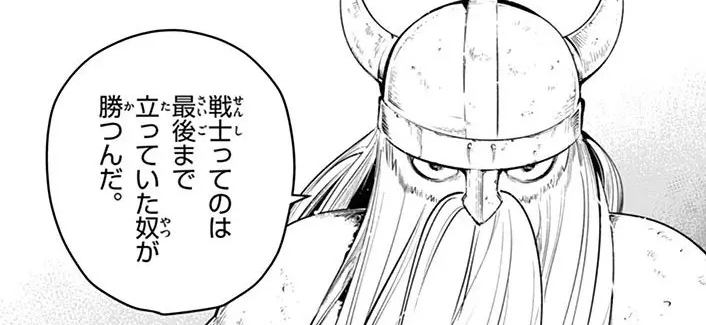
ISMの匂いを感じたきっかけは、アニメ化でも話題になった「葬送のフリーレン」、その中で「戦士アイゼン」が言った”戦士ってのは最後まで立っていた奴が勝つんだ”という言葉です。なるほど、戦士らしい言葉です。
実はこの考え方は、多くの漫画で採用されています。中国の戦国時代を舞台とした「キングダム」の「信」も”ケンカってのは最後に立ってた奴の勝ちだ”と仲間を鼓舞していますし、「ベルセルク」の「ガッツ」も”戦ってのは最後に立ってたもん勝ちなんだよ”と戦いに向けて決意を固めています。ここで浮かぶ疑問としては、戦いの結果として、立ちながらも気絶している人と立ち上がれないが意識のある人がいた場合、立ちながらも気絶している人が勝者なのでしょうか。
勝ち負けの定義は、シチュエーションによっても変わりそうです。「3月のライオン」の「川本ひなた」は、学校内でいじめを受ける、という厳しい状況下に身を置きますが”生きて卒業すれば私の勝ちだ”という勝ち負けの定義を打ち出しています。ある意味「最後まで立っていたもの」が卒業できるという点で、前述の定義とも共通する箇所が見て取れます。
では、スポーツの世界ではどうでしょうか。スポーツにはルールが存在するので、勝ち負け自体は明確という特徴から、「勝ち方」にフォーカスされる側面が伺えます。例えば、サッカーを主題とした「アオアシ」のなかでは「最もダメージを与える勝ち方を。」というフレーズがあります。圧倒的な勝ち方をすることが、スポーツの世界における勝ちを形作る一つの要素と言えそうです。
「最後まで立っているものが勝つ」という定義と似て非なるものが「戦い続ける限りは負けない」という考え方です。「進撃の巨人」での”人は戦うことをやめた時初めて敗北する。戦い続ける限りはまだ負けてない”というフレーズや「バガボンド」の「宮本武蔵」が放った”負けじゃねえ、勝ちへの途中!”というフレーズから、そうした意図が読み取れます。根本的には、同じ考え方のような印象もありますが、最後まで立っていても戦いを諦めていることもありますから、勝ち負けの定義としては異なりますね。
勝ち負けの定義を調べていて印象的だった人物は、格闘技漫画「範馬刃牙」の「範馬勇次郎」です。彼の勝ち負けの定義は”決着の際の標高、海抜、頭の位置をより高きに置くもの、それが勝者!”とのこと。字面だけでいうと、全く意味がわかりません。実際の作中では、息子の範馬刃牙が重傷ではあるものの、決着の際には範馬勇次郎が地面に倒れていたので、範馬刃牙が勝利しました。この定義は「最後まで立っていたものが勝ち」という考え方を突き詰めたようにも感じますが、もしかしたら勝ち負けが一変するシチュエーションも含まれていそうな言い方です。
戦もなければ、喧嘩もない、格闘技にもルールがあるような時代ですが、あなたの人生において「勝ち負けの定義」はありますか。自分なりの定義があれば、いざという勝負の場面で、腹を括ることができます。そしてそれが、巡り巡ってあなたのISMまで昇華されるかも。皆さんの勝ち負けの定義、ぜひ聞かせてください。
次回のPEOPLISMもお楽しみに。
Hi guys. How’s going? As always, Thank you for checking PEOPLISM. It has become so rare that I can no longer remember what “autumn” was like when I was a child.
Come to think of autumn, It’s “autumn of battles”. How many battles have you been in? In this issue of PEOPLISM, I would like to focus on the “definition of winning and losing” in manga, which has the scent of ISM.
What made me feel ISM was a quote from “Eisen the Warrior” in “Frieren,” which became a hot topic in the anime adaptation: “A warrior is a man who stands until the end, and he wins.” Well, it is a very warrior-like phrase.
In fact, this concept has been adopted in many comic books. In “KINGDOM” set in the Warring States period of China, “Shin” inspires his comrades by saying, “In a fight, the last man standing wins.” “Guts” in “BERSERK” also says, ”In a fight, the last man standing wins.” If a battle results in one person who is standing but unconscious and another who is physically unable to stand but conscious, is the one who is standing but unconscious the winner?
The definition of winner and loser seems to change depending on the situation. “Hinata Kawamoto” in “March comes in like Lion” finds herself in a difficult situation where she is bullied at school, but she defines victory and defeat by saying, “I win if I graduate alive.” In a sense, “the one who stands until the end” can graduate from the school, which is similar to the aforementioned definition.
How about the world of sports? In sports, there are rules, so winning and losing themselves are clear, and this is why the focus is on “how to win.” For example, in “AOASHI” which is about soccer, there is the phrase, “Win in the most damaging way on your opponent.” Winning in an overwhelming way seems to be one of the elements that shape winning in the world of sports.
Similar but different from the definition of “the last man standing wins,” is the idea that “as long as you keep fighting, you will never lose.” In “Attack on Titans” one guy says, “A man is defeated only when he stops fighting. As long as you keep fighting, you have not yet lost.” Also In “Vagabond” “Musashi Miyamoto” says, ”I have not lost, I’m on the way to winning!” We can read such intentions in these phrase. Fundamentally, they feel similar, but they are different, since a person may have given up the fight even if that person is standing at the end.
One person who struck me while researching the definition of winning and losing was “Yujiro Hanma” from the martial arts manga “Hanma Baki”. His definition of winning and losing is “The one who places the elevation, sea level, and head position higher at the time of settlement, that is the winner!” And so on. Literally speaking, it makes no sense at all. In the actual work, although his son Hanma Baki was seriously injured, Hanma Baki won because Yujiro Hanma was on the ground at the time of the settlement. This definition seems to me to be a push for the idea that “the one who stands until the end wins,” but it is also a way of saying that perhaps it includes a situation in which the winner and loser are completely different.
We live in an age where there are no battles, no fights, and rules for martial arts, but do you have a definition of “winning and losing” in your life? If you have your own definition, you will be able to be prepared when the time comes to win or lose. And it may eventually lead you to your ISM. We would love to hear your definition of winning and losing, so let us share.
Please look forward to the next PEOPLISM.
 PEOPLISM